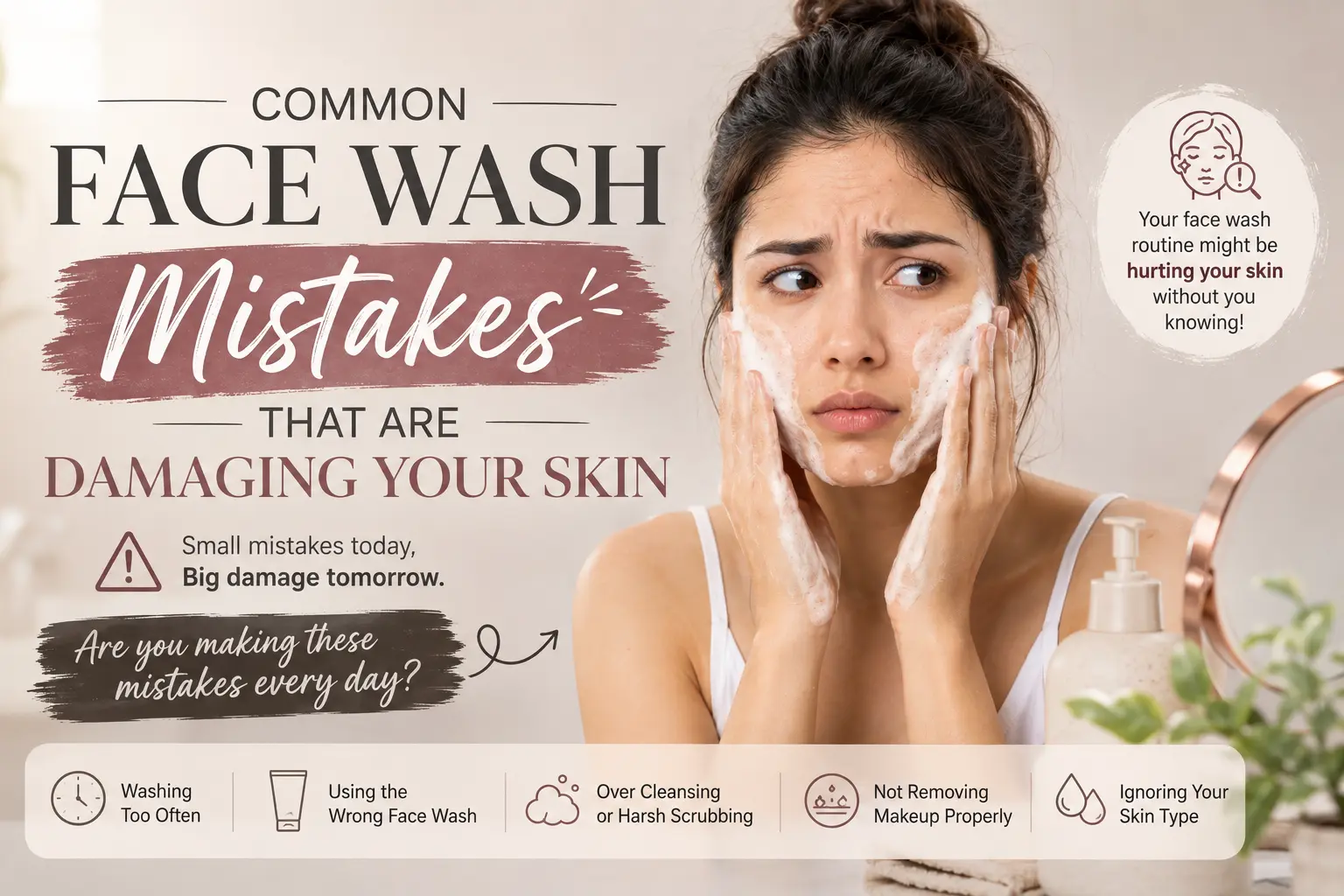
Common Face Wash Mistakes That Are Damaging Your Skin
Beauty & Self-Care
•
7 mins read
•
August 7, 2026
Are You Unknowingly Damaging Your Skin Barrier?
Cleansing is the single most important daily step in any skincare routine. However, innocent everyday cleansing habits—like washing with hot water, scrubbing too hard, or buying a cleanser just because it's trending—can quietly break down your natural moisture barrier.
When your skin barrier is compromised, it leads to severe rebound oiliness, persistent acne breakouts, chronic redness, and premature fine lines. In this forensic breakdown, we uncover the 10 most common face wash mistakes people make, explain the exact science of why they are harmful, and provide simple dermatologist-approved solutions!
Essential Skincare Rule #1
Do you know your true skin type before choosing a wash?
Discover your exact skin type and active ingredient match in our full skin guide.
Read Skin Type Guide
The 10 Most Damaging Face Wash Mistakes
1
Buying a Face Wash Without Knowing Your Skin Type
What this mistake is:
Purchasing a cleanser purely because it was trending on social media, heavily advertised, or recommended by a friend without assessing your own skin's unique biological needs.
Why it is harmful:
There is no single face wash suitable for all skins. A foaming BHA wash formulated for oily skin will severely dehydrate dry skin, while a heavy cream cleanser made for dry skin will clog pores and cause breakouts on oily skin.
The Solution:
First identify your exact skin type (Oily, Dry, Combination, Sensitive, or Acne-Prone) before buying any cleanser.
2
Chasing the "Squeaky Clean" Feeling (Using Harsh Sulphates)
What this mistake is:
Believing that skin should feel tight, stiff, and "squeaky" after washing, leading to the use of harsh industrial surfactants like Sodium Lauryl Sulphate (SLS) or Sodium Laureth Sulphate (SLES).
Why it is harmful:
That "squeaky" feeling is a warning sign that your skin's protective acid mantle and natural lipid barrier have been completely stripped. This invites bad bacteria, causes acute redness, micro-cracks, and triggers your sebaceous glands to produce twice as much oil to compensate.
The Solution:
Switch to 100% Sulphate-Free, pH 5.5 balanced cleansers with mild amino acid surfactants. Healthy skin should feel soft, supple, and comfortable after washing—never tight.
3
Washing Your Face with Hot Water in the Shower
What this mistake is:
Washing your face under steaming hot shower water under the common myth that hot water "opens up pores to melt away dirt."
Why it is harmful:
Pores do not have muscles and cannot open or close! Hot water dilates delicate facial capillaries, triggering rosacea flare-ups and causing persistent facial redness and rapidly strips away essential Natural Moisturising Factors (NMF), leaving skin dehydrated.
The Solution:
Always wash your face at the sink using lukewarm or cool water. Keep hot shower water off your delicate facial skin.
4
Using Physical Walnut or Apricot Scrubs on Active Acne
What this mistake is:
Scrubbing face daily with coarse physical walnut shell powders or harsh microbeads to forcibly "scrub away" blackheads and pimples.
Why it is harmful:
Jagged physical scrub particles tear open active pimples, creating microscopic skin tears. This pops bacteria (*C. acnes*) internally and spreads active acne across healthy areas while leaving permanent scars.
The Solution:
Ditch harsh physical scrubs completely! Replace physical scrubs with gentle chemical exfoliants. For oily or acne-prone skin, use a 1–2% Salicylic Acid (BHA) wash; for dry or sensitive skin, opt for milder AHA or PHA formulations.
5
Over-Cleansing More Than Twice a Day
What this mistake is:
Washing your face 3 to 5 times throughout the day whenever skin feels slightly greasy, after workouts, or during summer heat.
Why it is harmful:
Frequent washing disrupts the delicate skin microbiome, destroys protective lipids, and causes severe dehydration. Your skin responds by producing even more oil to protect itself.
The Solution:
Limit facial cleanser use to a maximum of twice daily (Morning & Night). Midday grease can be managed with plain cool water splash or oil-blotting papers.
6
Picking the Wrong Cleanser Texture (Foam vs Gel vs Cream)
What this mistake is:
Assuming all cleanser textures perform identical functions regardless of whether they are foaming gels, rich lotion creams, or micellar jellies.
Why it is harmful:
The physical texture determines surfactant power and moisture retention. Using heavy creams on oily skin clogs pores, while using intense foaming gels on dry or sensitive skin leads to severe scaling and peeling.
The Solution:
Match formula texture to your skin type: Gels for oily/acne skin, Creams for dry skin, and Micellar Jellies for sensitive skin.
7
Expecting Face Wash to Remove Dark Spots or Tan Overnight
What this mistake is:
Expecting a wash-off cleanser (which contacts skin for only 60 seconds) to magically fade deep sun tan, dark spots, or hyperpigmentation.
Why it is harmful:
Leads consumers to buy overly aggressive exfoliating acid washes and use them excessively, causing chemical irritation, skin redness, and post-inflammatory hyperpigmentation.
The Solution:
Understand that face wash is meant for clean preparation. Treat dark spots and tan using leave-on targeted serums (Vitamin C, Niacinamide, Alpha Arbutin) and daily broad-spectrum SPF sunscreen.
8
Rubbing Aggressively with a Dirty Bath Towel
What this mistake is:
Vigorously rubbing your face dry with the same bath towel used for your body after washing.
Why it is harmful:
Damp bath towels harbour bacteria, fungi, and dead skin cells. Rough physical rubbing causes micro-friction tears, compromises the delicate skin barrier, and transfers body bacteria onto freshly cleansed facial skin.
The Solution:
Gently pat (never rub) your face dry using a dedicated clean microfibre face towel or single-use facial tissue.
9
Buying Cleansers Solely for Synthetic Fragrance & Pretty Packaging
What this mistake is:
Selecting a face wash based on pretty pastel bottles or sweet floral/fruity scents.
Why it is harmful:
Synthetic fragrance (Parfum) is one of the top causes of cosmetic contact allergy, itchy bumps, and allergic skin flares. Fragrance offers zero skincare benefit.
The Solution:
Always prioritise fragrance-free or scent-neutral formulas with clean ingredient lists.
10
Not Checking Dermatologist Recommendations or Tested Product Lists
What this mistake is:
Buying unverified, cheap local cleansers or random unrated online brands without checking dermatologist safety tests or user reviews.
Why it is harmful:
Unverified cleansers often contain unlisted alkaline soaps, harsh preservatives, or heavy comedogenic pore-cloggers that damage skin over time.
The Solution:
Always choose dermatologist-tested, clinically proven cleansers with verified ratings.
Protect Your Moisture Barrier Starting Today!
By eliminating these 10 cleansing mistakes, you protect your skin's acid mantle, prevent acne outbreaks, and maintain radiant, healthy skin for years to come.